

A Complete Guide to IPO Bases
Introduction
Every year hundreds of companies get listed on the stock market. While many traders rush to buy on listing day, experienced traders understand that the real opportunity often comes after the initial excitement fades.
The strongest IPO winners rarely move in a straight line. Instead, they spend time building a base where early sellers exit, institutions accumulate shares, and supply gradually dries up.
we call this the Accumulation Phase. Understanding this phase allows traders to enter with defined risk instead of chasing momentum.
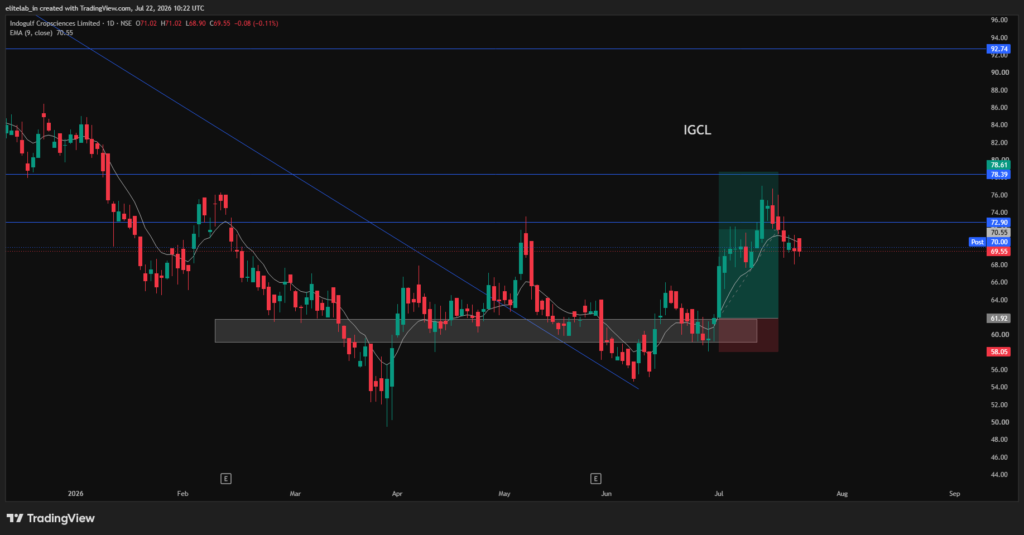
What is an IPO Base?
An IPO Base is a price consolidation that forms after a company gets listed on the stock exchange.
During this period:
- Early investors book profits.
- Weak hands exit.
- Institutions quietly build positions.
- Volatility contracts.
- Supply gets absorbed.
Once buyers overwhelm sellers, the stock breaks out and often starts a powerful trend.
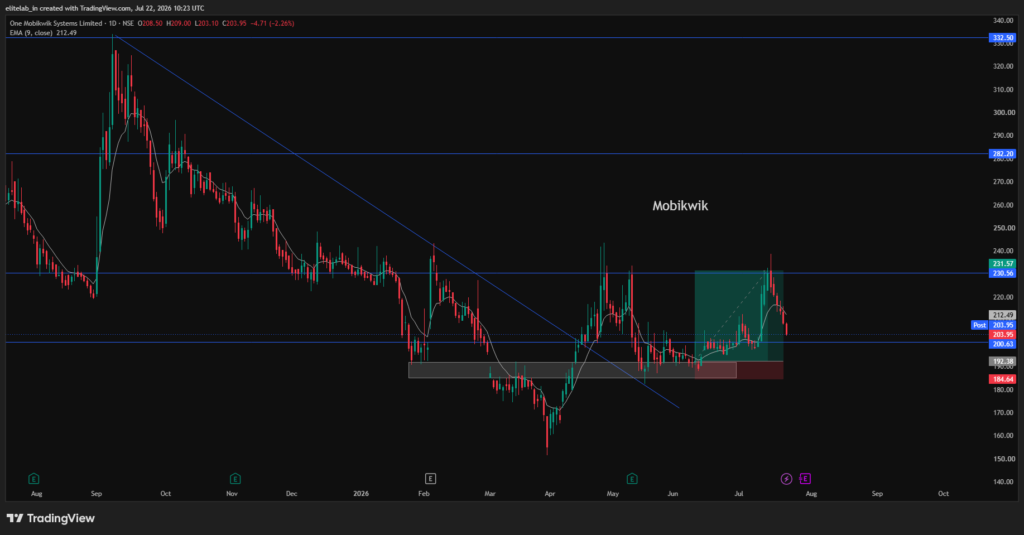
Why IPO Bases Work
IPO bases work because of market psychology.
After listing:
- Investors who received IPO allotments begin booking profits.
- New buyers wait for better prices.
- Institutions analyze financials before accumulating.
- Selling pressure gradually decreases.
When demand becomes stronger than supply, price expansion begins.
This imbalance creates one of the highest momentum opportunities in growth investing.
The IPO Framework
Instead of looking only at charts, EliteLab evaluates every IPO using five pillars.
1. Listing Strength
Questions to ask:
- Was the listing premium healthy?
- Was institutional participation strong?
- How did price behave during the first week?
2. Price Structure
Look for:
- Higher lows
- Tight trading ranges
- Controlled pullbacks
- Healthy volume contraction
Avoid erratic price action.
3. Volume Analysis
Strong IPO bases usually show:
- Declining selling volume
- Increasing buying volume
- Breakout accompanied by volume expansion
Volume is confirmation that institutional demand is entering.
4. Market Environment
Even the best IPO struggles in a weak market.
Before entering any IPO trade, evaluate:
- Overall market trend
- Sector strength
- Relative performance
Trading with the market significantly improves probabilities.
5. Risk Management
Every trade should define:
- Entry
- Stop-loss
- Position size
- Profit management
Capital preservation is more important than maximizing returns.
Types of IPO Bases
Early Tight Base
Characteristics:
- Forms within days after listing
- Very small correction
- Strong relative strength
Suitable for aggressive traders.
Flat Base
Characteristics:
- Sideways movement
- Low volatility
- Multiple resistance tests
Often leads to powerful continuation breakouts.
Cup Formation
Characteristics:
- Deeper correction
- Gradual recovery
- Strong accumulation
Provides higher conviction but requires patience.
Long Accumulation Base
Characteristics:
- Lasts several months
- Institutions gradually accumulate
- Volatility contracts
Often produces the largest long-term moves.
Common Mistakes
Many traders fail because they:
- Buy immediately after listing.
- Ignore volume.
- Chase extended breakouts.
- Use oversized positions.
- Ignore market conditions.
Professional traders focus on probability rather than excitement.
Entry Checklist
Before entering an IPO trade, ask yourself:
✅ Strong market trend
✅ Sector leadership
✅ Healthy IPO fundamentals
✅ Tight base formation
✅ Volume contraction during consolidation
✅ High-volume breakout
✅ Defined stop-loss
If most conditions are met, the setup deserves attention.
Trade Management
After entering:
- Do not widen your stop-loss.
- Scale into strength only when justified.
- Protect profits during extended runs.
- Exit when price breaks your trading plan—not because of emotions.
Consistency comes from disciplined execution.
Final Thoughts
IPO base trading is not about buying every new listing.
It is about identifying companies where demand quietly overpowers supply before the crowd notices.
With disciplined analysis, proper risk management, and patience, IPO bases can become one of the most rewarding momentum setups.
The goal at EliteLab is not to predict every winner—it is to participate only when probability is on your side.